
Heat losses and gains
Heat losses and gains, depending on the direction of movement of thermal energy, whether we want to retain or remove it in a space, object or medium, we define the terms losses and gains thereof.
For example, we want to keep the heat energy that heats some of the space in which we live and whose potential of thermal energy is expressed by a temperature in such a way that we supply heat energy to some heating bodies, and prevent the loss of the energy as efficiently as possible in order to use as little energy as possible for that operation. by which we produce thermal energy for said heating body such as electricity (electricity), gas (chemical energy) and the like.
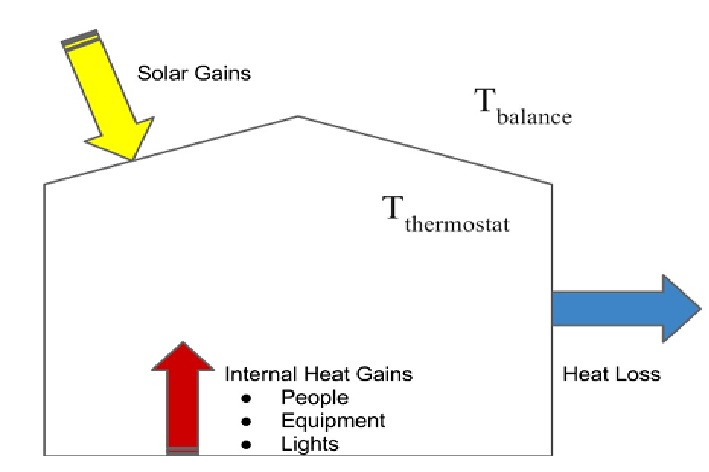
The typical story is mentioned of a situation where spaces, objects, objects, media, devices, technologies, processes and the like need to be heated by the supply of heat.
Similarly, for the same room in another case, we want to prevent the heat from entering the outside so that it does not overheat to a higher undesirable temperature. Then the direction of thermal energy is opposite and we want to stop it as much as possible by simultaneously cooling the room, for example by cooling the existing air of the room by removing the heat energy by the coolant in order to consume as little, usually electricity, for the operation of the coolant. The typical story is mentioned of a situation where spaces, objects, objects, media, devices, technologies, processes and the like need to be cooled by heat dissipation.
The thermal energy that is actually required to be supplied or removed for the two cases mentioned above is essentially the energy required to compensate for heat losses or gains depending on whether it is heating or cooling.